
7 Small Living Room Layout Mistakes That Make Your Space Feel Smaller
Struggling with a small living room that feels cramped no matter what you do? These common layout mistakes could be making it feel even smaller. Here’s how to fix them beautifully and make your space feel calmer, lighter, and more functional.
Most small living rooms do not actually have a space problem
They have a layout problem.
That is why two living rooms can be the exact same size, but one feels airy and inviting while the other feels cramped, awkward, and frustrating to sit in. The difference is rarely magic. It is usually in the way the furniture is placed, how the room is visually balanced, and whether the layout allows the eye to move easily through the space.
A lot of people assume a small living room feels small because it simply is small. But in many cases, the room is being made to feel smaller by a few common layout mistakes that quietly work against it every day.
Maybe the sofa is too big for the footprint. Maybe every piece of furniture is shoved hard against the walls in an attempt to create more room, but somehow the space still feels off. Maybe the rug is too tiny, the corners are crowded, or the natural light is getting blocked without anyone noticing.
If your living room feels tighter than it should, there is a very good chance the issue is not the room itself. It is the way the room is being used.
Let’s fix that.
Before you change anything, look for these signs
If your small living room has any of these problems, your layout may be the real reason it feels cramped.
| Sign your layout is not working | What it usually means |
|---|---|
| The room feels crowded even when it is tidy | Furniture scale or spacing is off |
| Walking through the space feels awkward | Traffic flow is blocked |
| The room has no cozy focal point | Furniture is not grounded properly |
| The space feels flat and uninspiring | Everything is pushed outward with no visual layering |
| The room looks cluttered very quickly | Too many small pieces or decor overload |
| It feels darker than it should | Light is being blocked by furniture or styling choices |
1. Pushing all furniture against the walls
The Mistake
This is one of the most common small-space mistakes, and it usually comes from good intentions.
A lot of people think pushing everything to the edges of the room will open up more floor space. In reality, it often does the opposite. It can make the middle of the room feel strangely empty while the perimeter feels heavy and overcrowded. Instead of looking bigger, the room ends up feeling disconnected and awkward.
A living room should feel like a conversation area, not like a waiting room.
When furniture is all lined up around the walls, it loses intimacy. Pieces stop relating to each other. The room can start to feel flat because everything is pressed into one visual line. In a small room, that kind of arrangement often makes the size of the room feel more obvious.
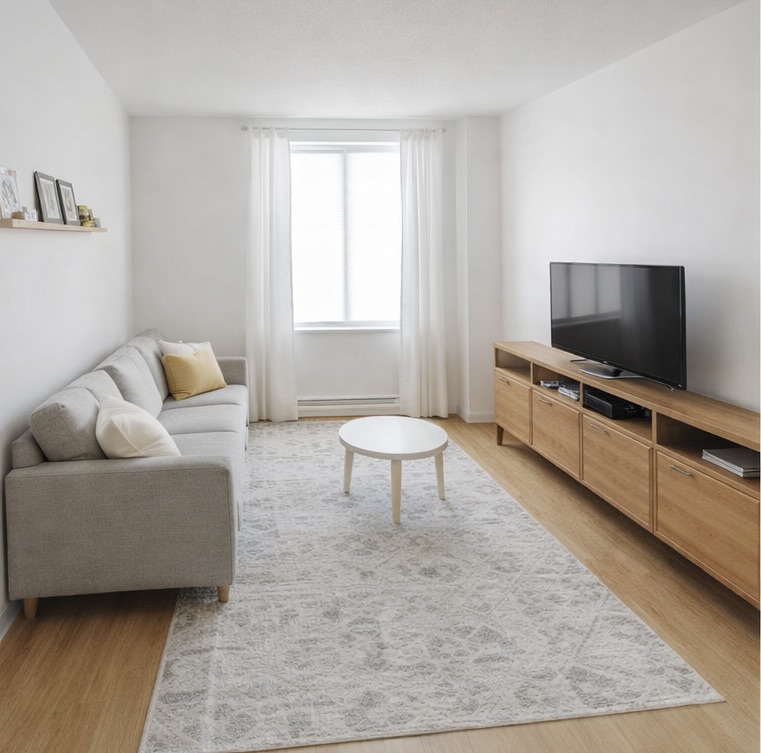
What to do instead
Pull at least one major piece slightly inward if you can.
That does not mean placing your sofa in the middle of the room with no thought. It means allowing your layout to breathe and feel intentional. Even moving a sofa a few centimetres off the wall can help the room feel less rigid. If your space allows it, float a chair slightly inward, or place a small side table between pieces so the arrangement feels more anchored.
The goal is to create a real seating zone rather than simply filling edges.
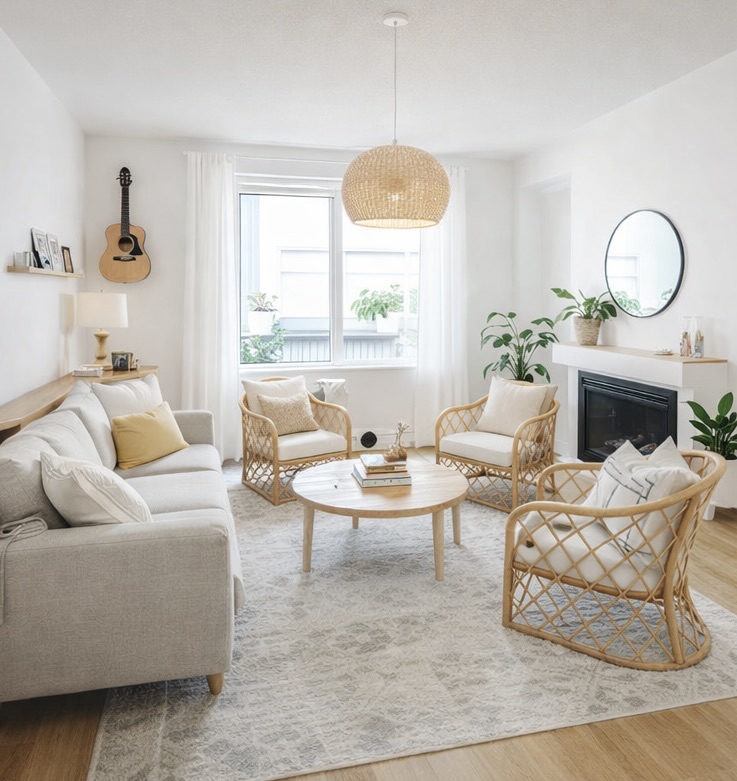
designer insight
A room feels larger when it feels designed.
Not when it feels like every item was pushed out of the way.
2. Using oversized furniture
.Small rooms and oversized furniture are a difficult combination.
One bulky sofa, extra-deep armchairs, a thick coffee table, or a large media unit can visually swallow a space before you even add anything else. And once a room is dominated by heavy pieces, everything starts feeling tighter, darker, and less flexible.
This is where a lot of small living rooms go wrong. People focus only on how beautiful a piece looks on its own, but not on how much visual weight it brings into the room.
There is a difference between a room having enough furniture and a room being overpowered by furniture.
What makes furniture feel too big
It is not always about length alone. A piece can be technically the right width, but still feel too large because of:
- chunky arms
- overstuffed cushions
- very deep seats
- thick bases
- dark, heavy materials
- furniture that sits flat on the floor with no visible legs
That last one matters more than people think. When you can see a little space underneath furniture, the room usually feels lighter and more open.
What to choose instead
Look for pieces that feel visually lighter, not flimsy.
A better small-space sofa often has:
- slimmer arms
- a more tailored silhouette
- raised legs
- a seat depth that is comfortable but not oversized
The same goes for coffee tables, sideboards, and accent chairs. In a small room, the right shape matters just as much as the size.
Quick comparison
| Better for a small living room | Usually harder to work with |
|---|---|
| Slim-arm sofa | Deep, bulky sectional |
| Coffee table with open base | Solid block coffee table |
| Chair with visible legs | Heavy barrel chair |
| Narrow console | Large entertainment unit |
| One well-scaled sofa | Multiple bulky seating pieces |
Shop Smart Picks for Small Living Rooms
Finding the right shape matters more than filling the space. These pieces reflect exactly what we just talked about; light, open, and space-enhancing without overwhelming your room.
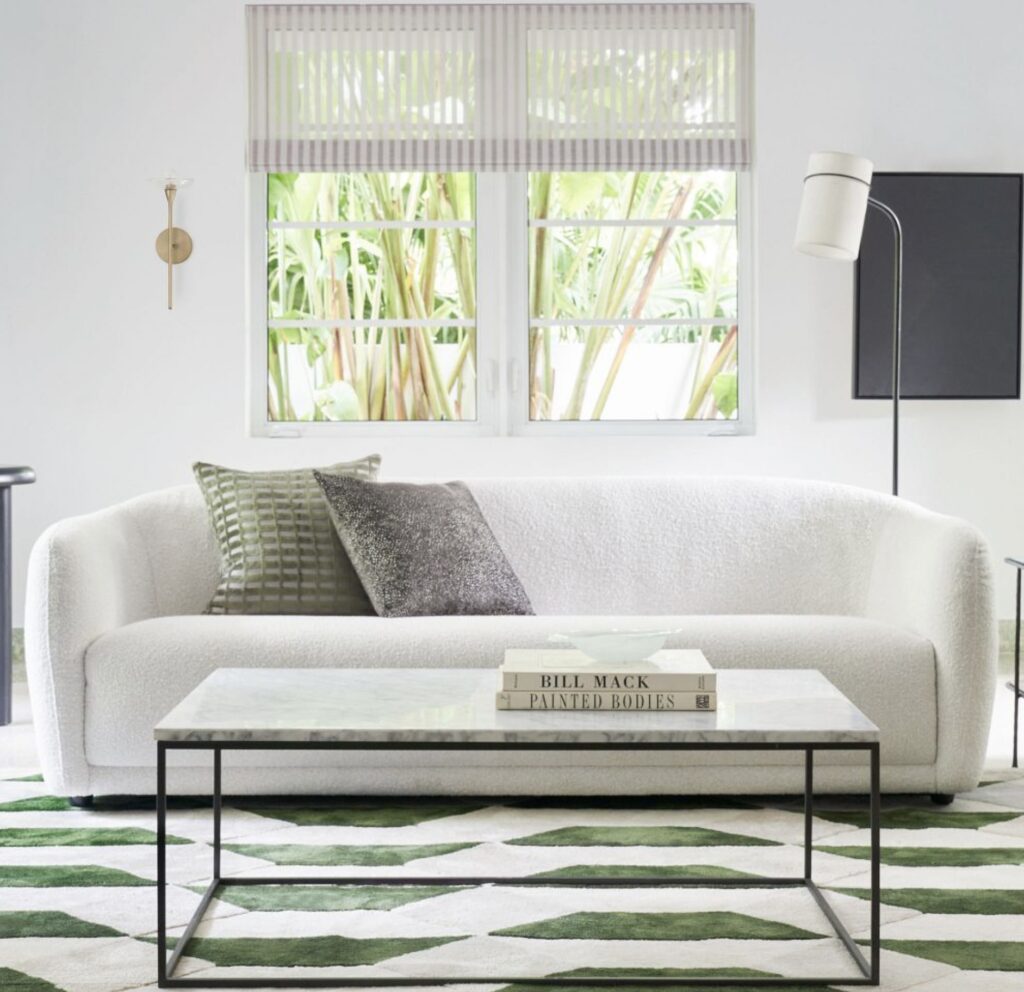
Slim-Arm Sofa
A narrow arm profile instantly reduces visual bulk, making your living room feel wider without sacrificing comfort
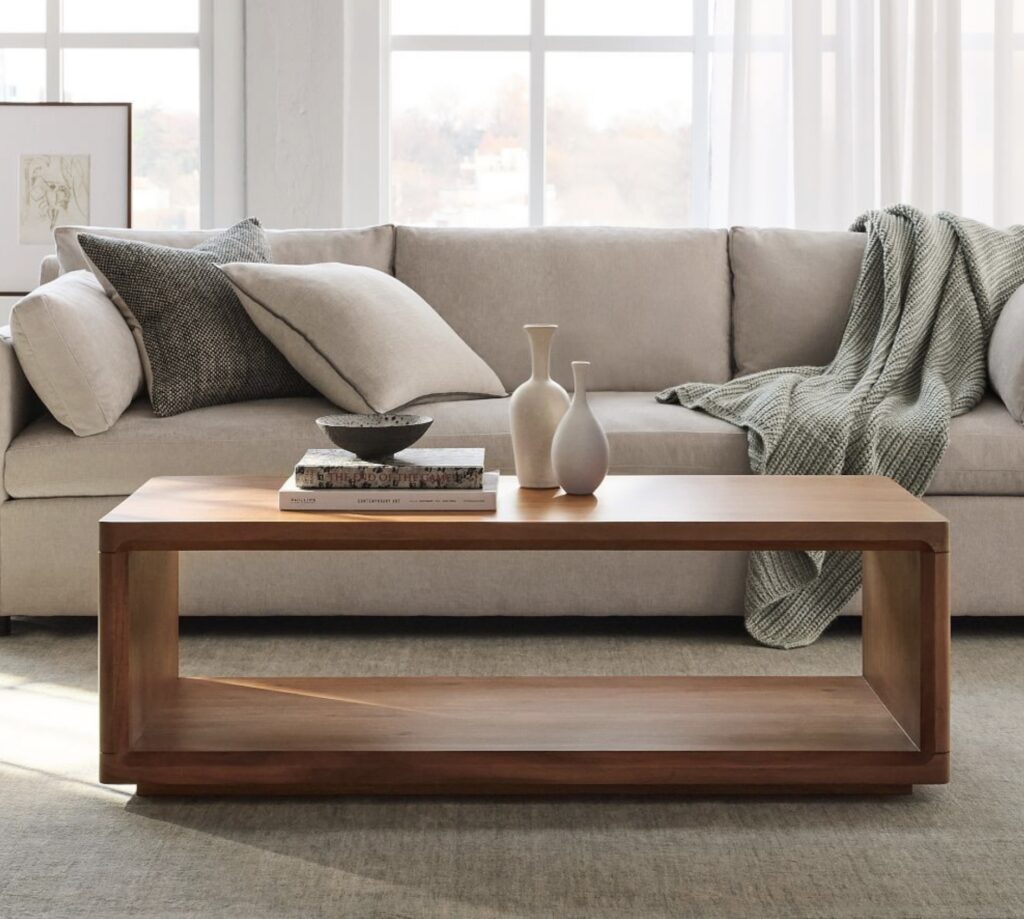
Open-Base Coffee Table
Keeping space visible underneath prevents that heavy, full feeling most small rooms struggle with.
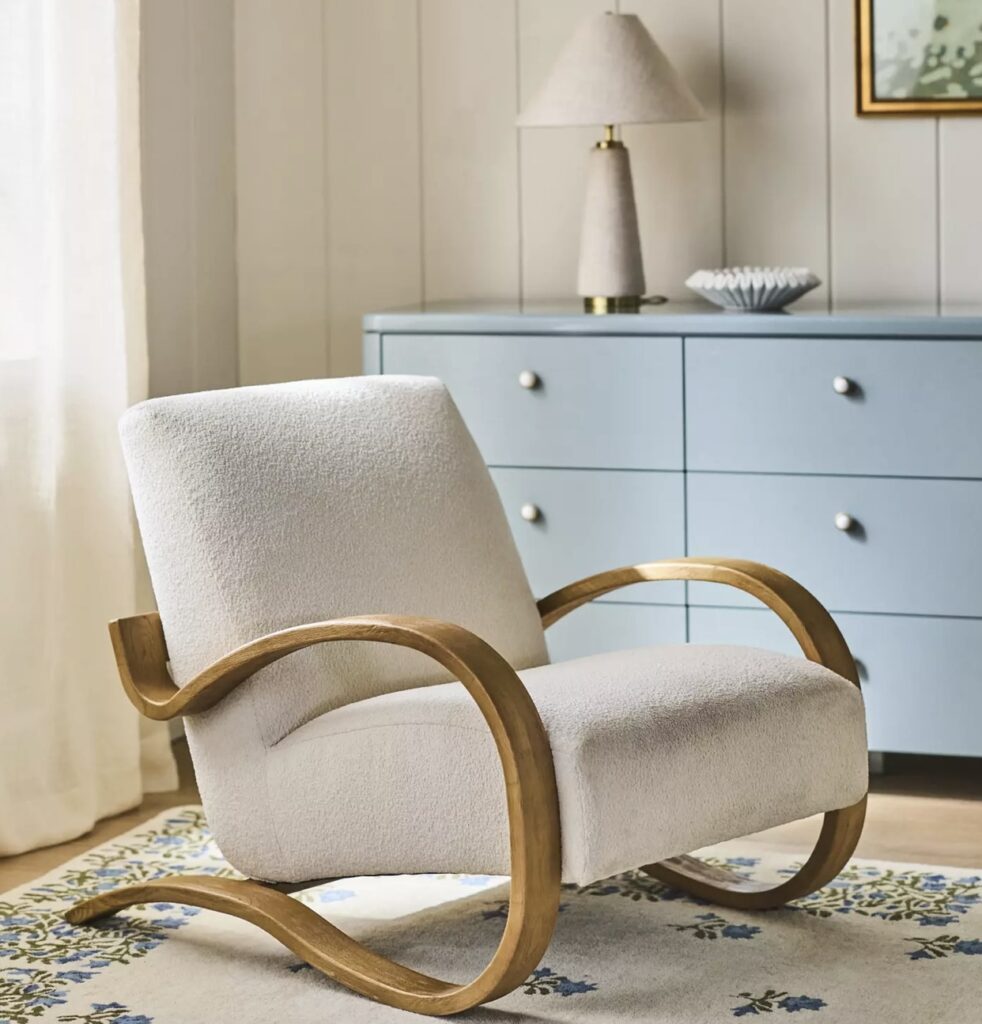
Light-Frame Accent Chair
A thin wood or metal frame allows light to pass through, which keeps the room feeling open.
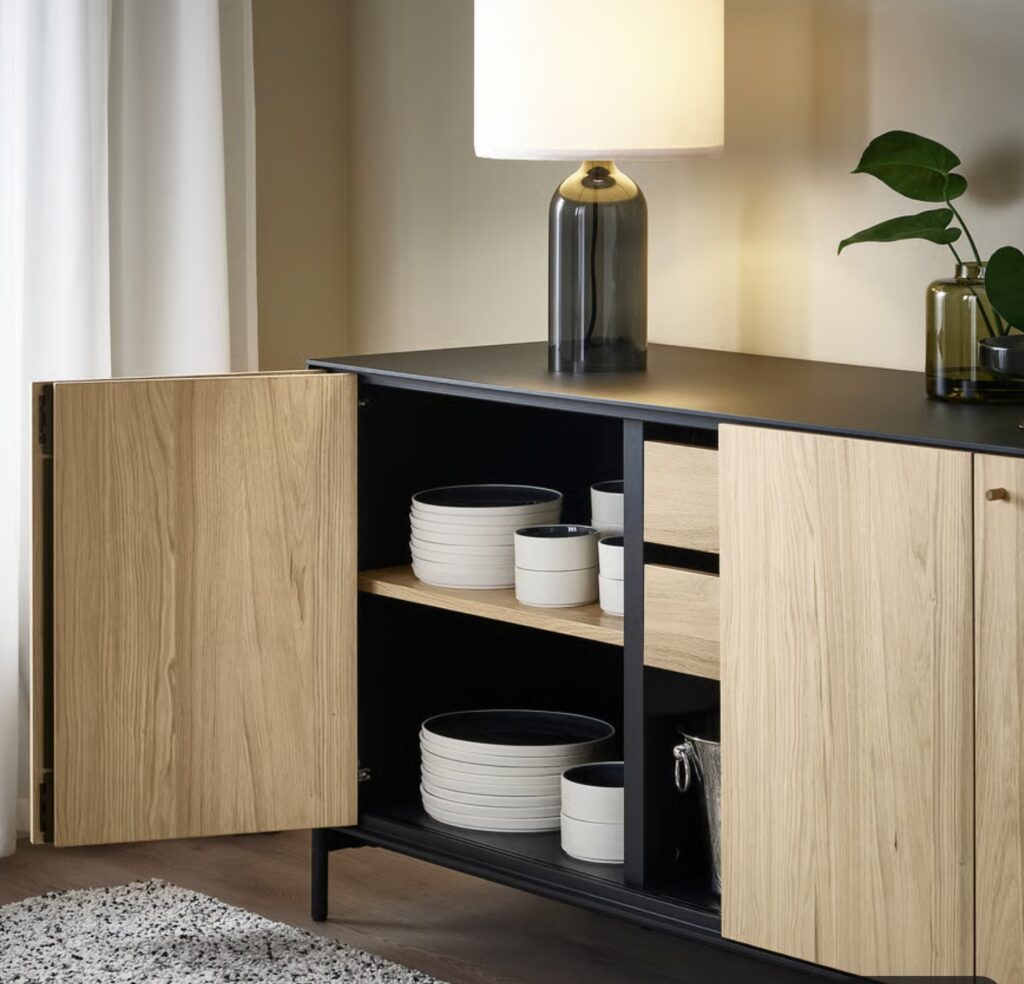
Narrow Storage Console
Adds function without depth, making it perfect for tight layouts where every centimetre matters.
Why these work in small spaces
They don’t visually touch the floor too heavily
Raised legs and lighter bases allow more floor to stay visible, which helps the room feel less crowded.
They allow light and air to move through the room
Open bases and lighter frames stop furniture from blocking the visual flow of the space.
They prioritise proportion over size
Smaller-scale silhouettes often work better than bulky pieces, even when the room technically has space.
3. Having no defined zones
Even a tiny living room needs structure.
When a room has no clear purpose or visual zones, it can feel messy even when it is clean. This happens a lot in small homes, apartments, and open-plan spaces where one room is trying to do several jobs at once.
Maybe your living room is also your reading nook, TV zone, work corner, and drop-off area for bags and blankets. When all of that exists without boundaries, the room starts to feel mentally noisy.
A defined zone tells the eye, and your brain, where things belong.
Why this matters so much in a small room
Small spaces need clarity more than large spaces do. In a large room, extra space can hide a lack of structure. In a small room, every choice is visible.
Without zones, the room can feel like one big collection of unrelated objects.
How to define zones without making the room feel crowded
You do not need walls or dividers. You just need subtle visual cues.
Try using:
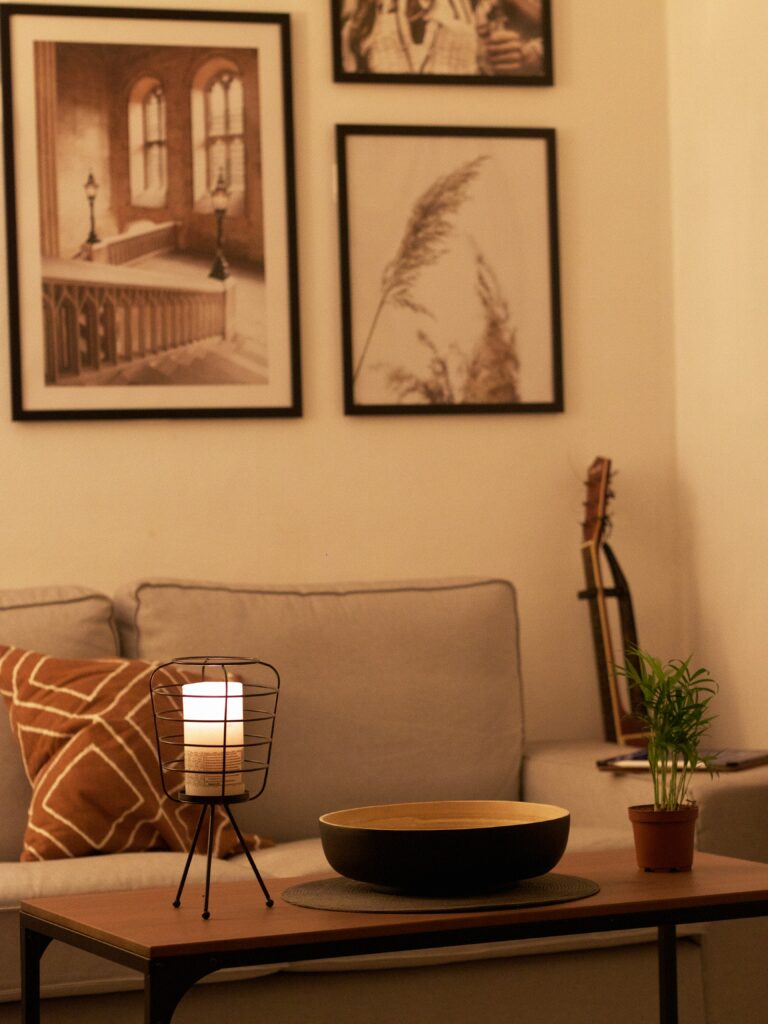
- a rug to anchor the seating area
- a floor lamp to define a reading corner
- one accent chair and side table as a separate little moment
- a console table behind a sofa if the room allows it
- lighting that gives different areas their own purpose
The goal is not to divide the room harshly. It is to give it shape.
A simple example
If you walk into a small living room and can instantly tell where people sit, where the eye lands, and where daily clutter belongs, the room will already feel calmer and more spacious.
4. Choosing the wrong rug size
This one changes a room more than most people expect.
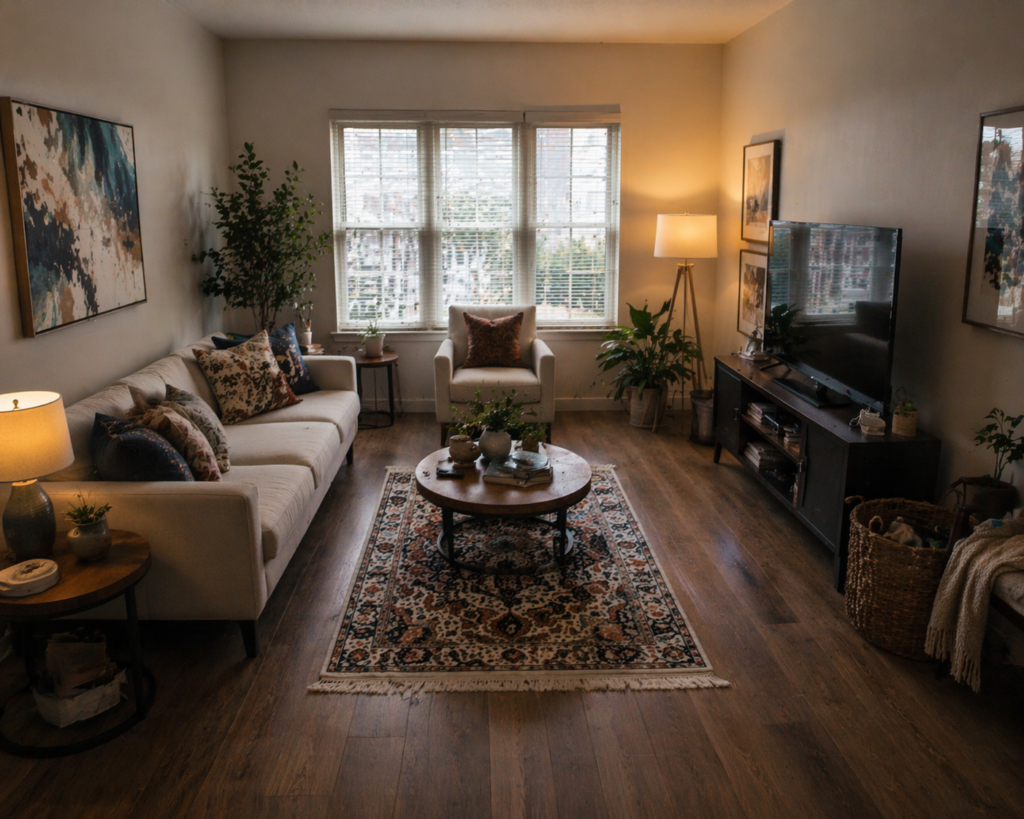
A rug that is too small can make your living room feel chopped up, disconnected, and even smaller than it is. It creates the visual effect of furniture floating separately instead of belonging together. That usually makes the layout feel accidental.
In small living rooms, people often buy tiny rugs because they are scared a larger rug will overwhelm the room. In practice, the opposite is usually true.
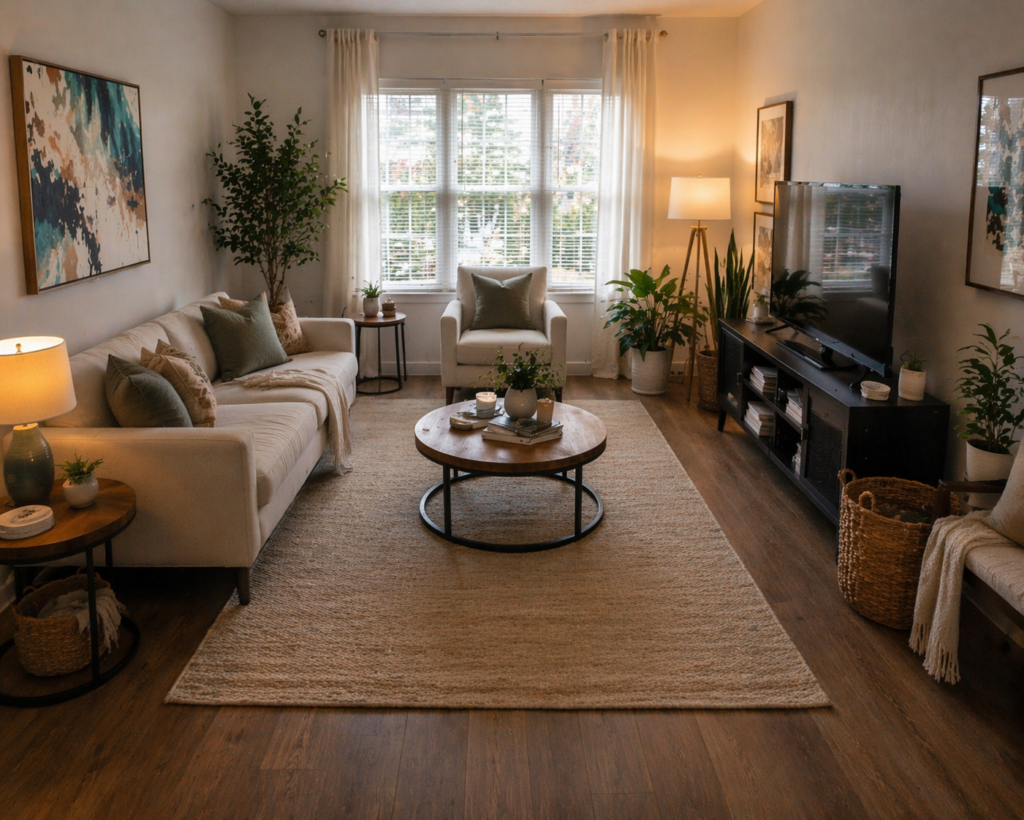
A larger rug often makes the room feel more generous because it visually connects the furniture and gives the seating area a proper foundation.
The real job of a rug
A rug is not just decoration.
It tells the eye where the living area begins and ends. It brings furniture into relationship with each other. It softens hard lines and helps the room feel settled.
The better rule to follow
Your rug should be large enough that at least the front legs of your main seating pieces sit on it.
That one change alone can make the room feel far more polished.
Rug size mistakes that shrink a room
Common mistake
- Tiny rug floating in the middle
- Rug only under coffee table
- Rug that stops too abruptly
- Overly busy pattern in a tight room
Why it makes the room feel smaller
- Makes furniture feel disconnected
- Creates a weak, unfinished center
- Visually cuts the room up
- Can make the floor area feel chaotic
A better approach
Choose a rug that supports the whole seating zone. Then let your furniture sit into it slightly so the room feels grounded.
This section is also perfect for affiliate linking later because readers are usually actively looking for exact rug solutions when they reach this point.
5. Blocking natural light
Natural light is one of the biggest assets a small living room has.
If your room gets even a decent amount of daylight, that light is doing important work. It is helping the walls feel less heavy, the corners feel less tight, and the space feel more open. So when furniture, curtains, or styling choices interrupt that light, the room can quickly start feeling smaller and duller.
Sometimes the light is being blocked in obvious ways, like a tall cabinet near the window. But often it happens more subtly.
It could be:
- dark curtains that feel too heavy
- furniture placed in front of the brightest part of the room
- decor crowding the window area
- a layout that turns away from the light instead of using it
What to do instead
Treat your windows like part of the layout plan, not an afterthought.
Ask yourself:
- what is blocking light from moving through the room
- which furniture pieces feel too tall near the windows
- whether your curtains feel airy or heavy
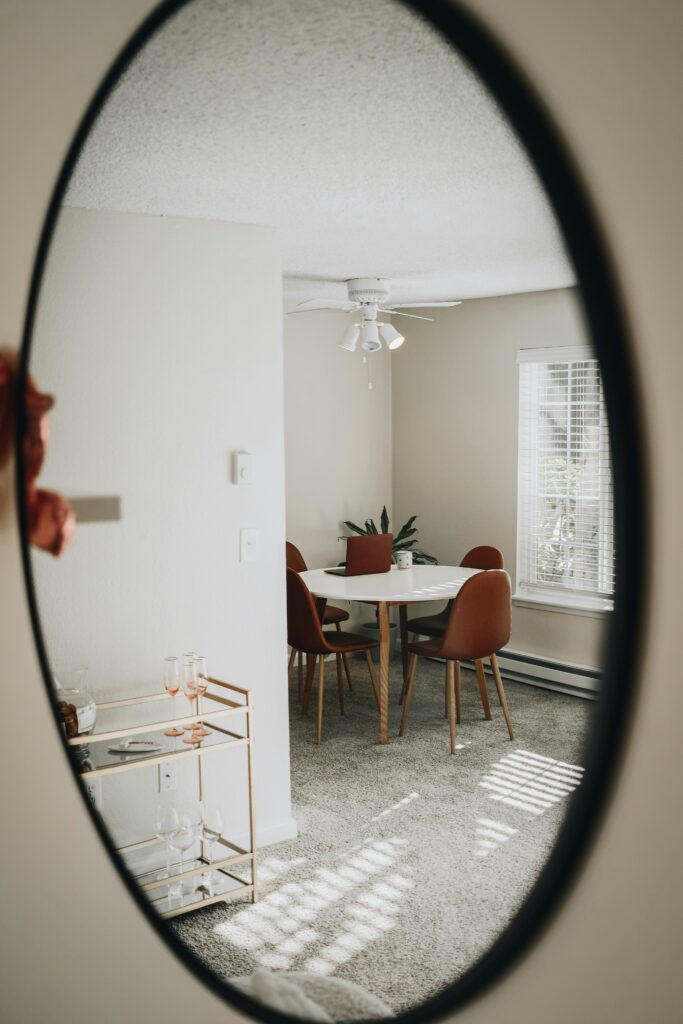
- whether a mirror could help bounce light deeper into the room
A very effective small-space trick
Place a mirror where it can catch and reflect natural light well. That does not just brighten the room. It also creates more visual depth, which can make the room feel larger.
But be intentional. A mirror should reflect something beautiful, not visual clutter.
Helpful styling note
If you want softness around windows, choose treatments that feel light and relaxed. In a small room, heavy window styling can make the room feel boxed in surprisingly fast.
6. Overcrowding with decor
This is where small living rooms often lose the feeling of calm.
Decor is important. It adds personality, warmth, and texture. But too many small decorative pieces can make a room feel visually busy, especially in a compact space.
A common mistake is trying to make the room feel finished by adding more and more. More cushions. More baskets. More candles. More little objects on every surface. More wall art. More styling moments.
But in a small living room, too much decor does not usually read as thoughtful. It reads as noise.
Why this happens
When a room feels unfinished, people often assume it needs more decoration.
What it usually needs is better editing.
The rooms that feel polished are not always the ones with the most decor. They are the ones where everything feels intentional.
What to do instead
Choose fewer pieces, but let them matter more.
Try this:
- keep surfaces partly clear
- style in groups rather than scattering items everywhere
- vary height and texture so the room feels layered
- keep some negative space around your decor
- use practical pieces that are also beautiful
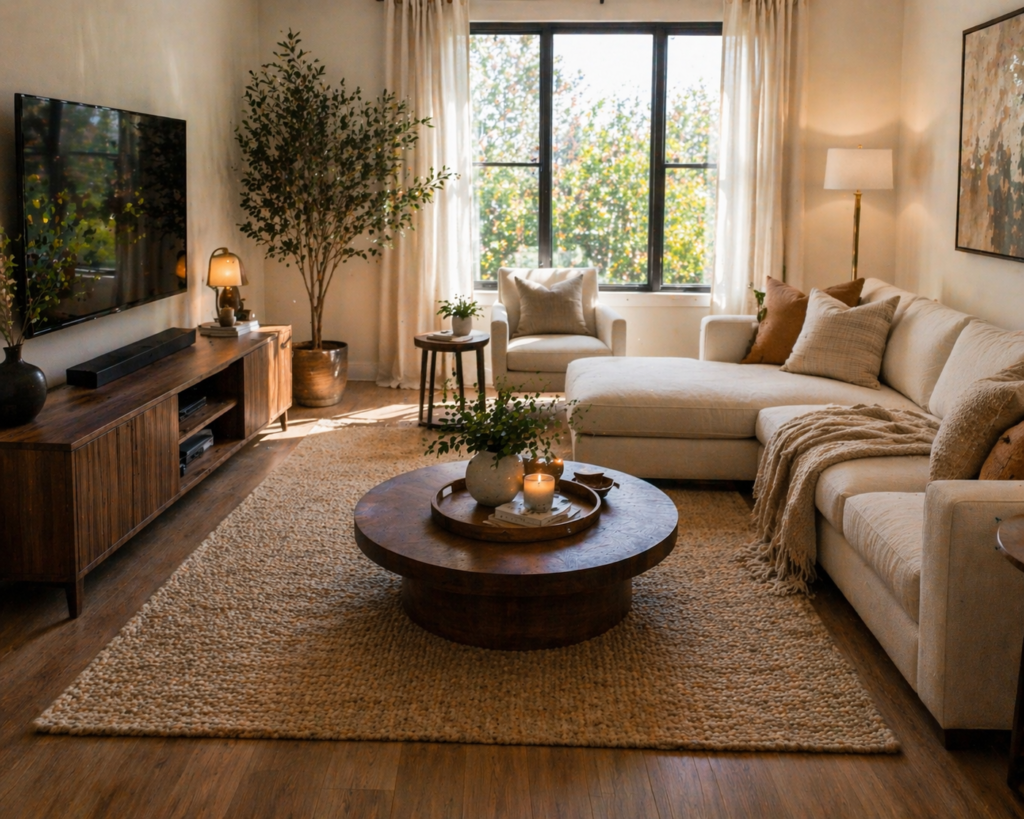
For example, one lovely tray on a coffee table with a candle, a small object, and a book can look far better than eight unrelated items spread across the room.
The rule that helps most
If every corner is trying to say something, the room becomes exhausting to look at.
Let some areas stay quiet.
7. Ignoring vertical space
When floor space is limited, the walls become incredibly important.
A lot of small living rooms only get styled at eye level and below. The result is that the room can feel compressed, because all the visual weight is sitting low. The walls stay underused, and the room misses a big opportunity to feel taller, more complete, and more functional.
Vertical space helps a small room in two major ways.
First, it gives you extra storage or display space without eating into the floor plan.
Second, it draws the eye upward, which can make the whole room feel taller and more open.
What vertical space can do well
- lift the room visually
- reduce pressure on floor furniture
- give storage a more elegant footprint
- make the layout feel finished from top to bottom
Good ways to use it
You do not need to cover every wall. In fact, that would create another problem. But you can use vertical space well with:
- floating shelves
- taller bookcases with breathing room around them
- wall lights
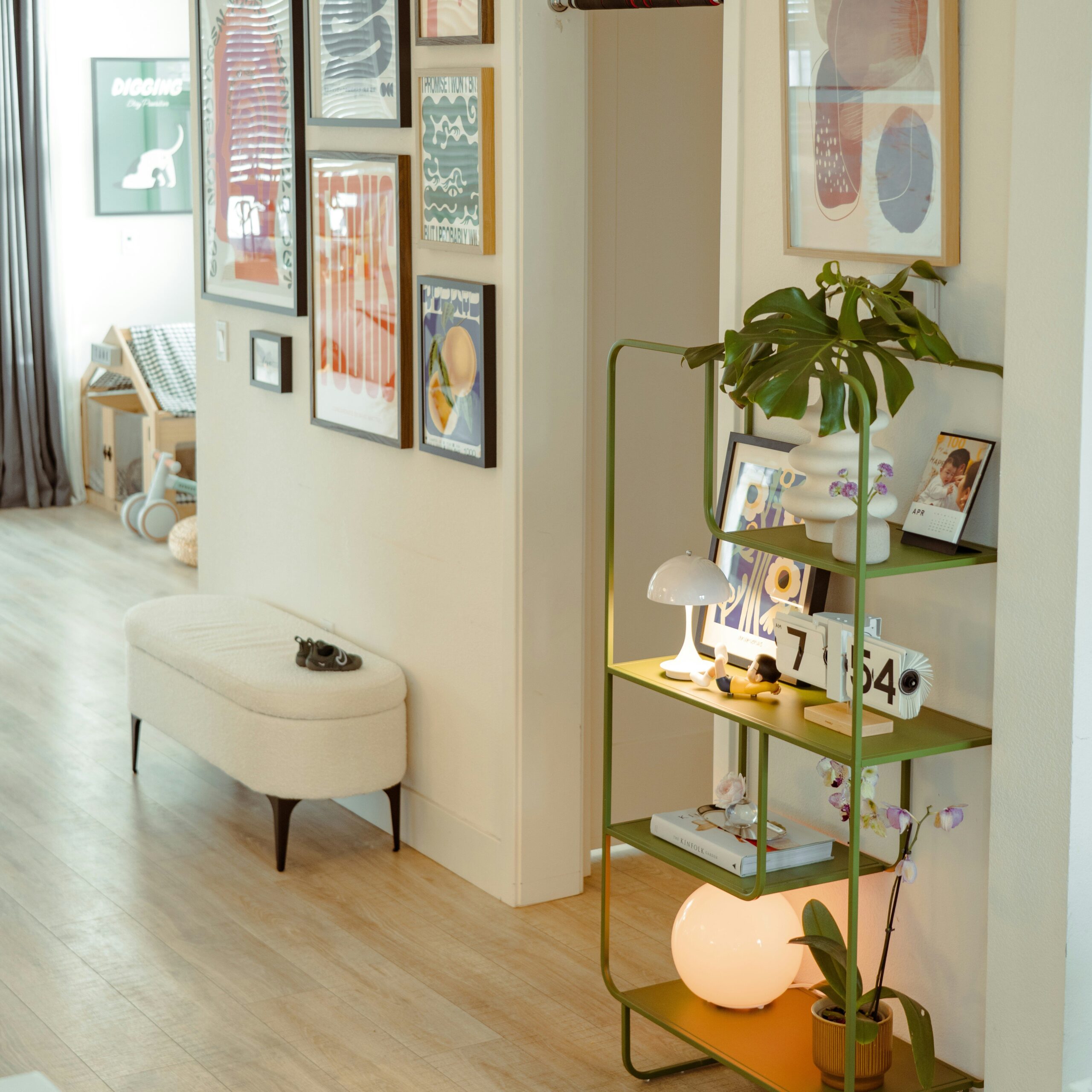
- well-placed art that sits high enough to stretch the eye upward
- hooks or wall-mounted storage in multifunctional spaces
One important caution
Vertical styling should still feel balanced.
If everything is pushed high with nothing grounding the lower half of the room, the space can feel top-heavy. The goal is connection between floor, furniture, and walls.
What actually makes a small living room feel bigger
It is not emptiness.
It is balance.
A small living room feels bigger when:
- furniture is scaled properly
- the layout has a clear focal point
- there is enough breathing room between pieces
- natural light can move easily
- the room has visual structure
- decor is edited with intention
- the eye can travel comfortably across the space
That is what creates that calm, elevated feeling people are usually chasing.
Not more stuff.
Better decisions.
You’ll Love These Too
Small Space Living
10 Small Space Living Ideas That Actually Make Your Home Feel Bigger (2026 Guide)
March 23, 2026