8 Things Designers Always Do in Small Living Rooms
SMALLER SPACE. BIGGER IMPACT.
Designers don’t get more square footage-they just know how to use what you have differently. These are the subtle, intentional moves that make a small living room feel calm,
expensive, and beautifully put together.
1. They Float Furniture (Even in Small Rooms)
Pushing everything against the walls might seem like the safe choice,
but it’s actually what makes a small living room feel smaller.
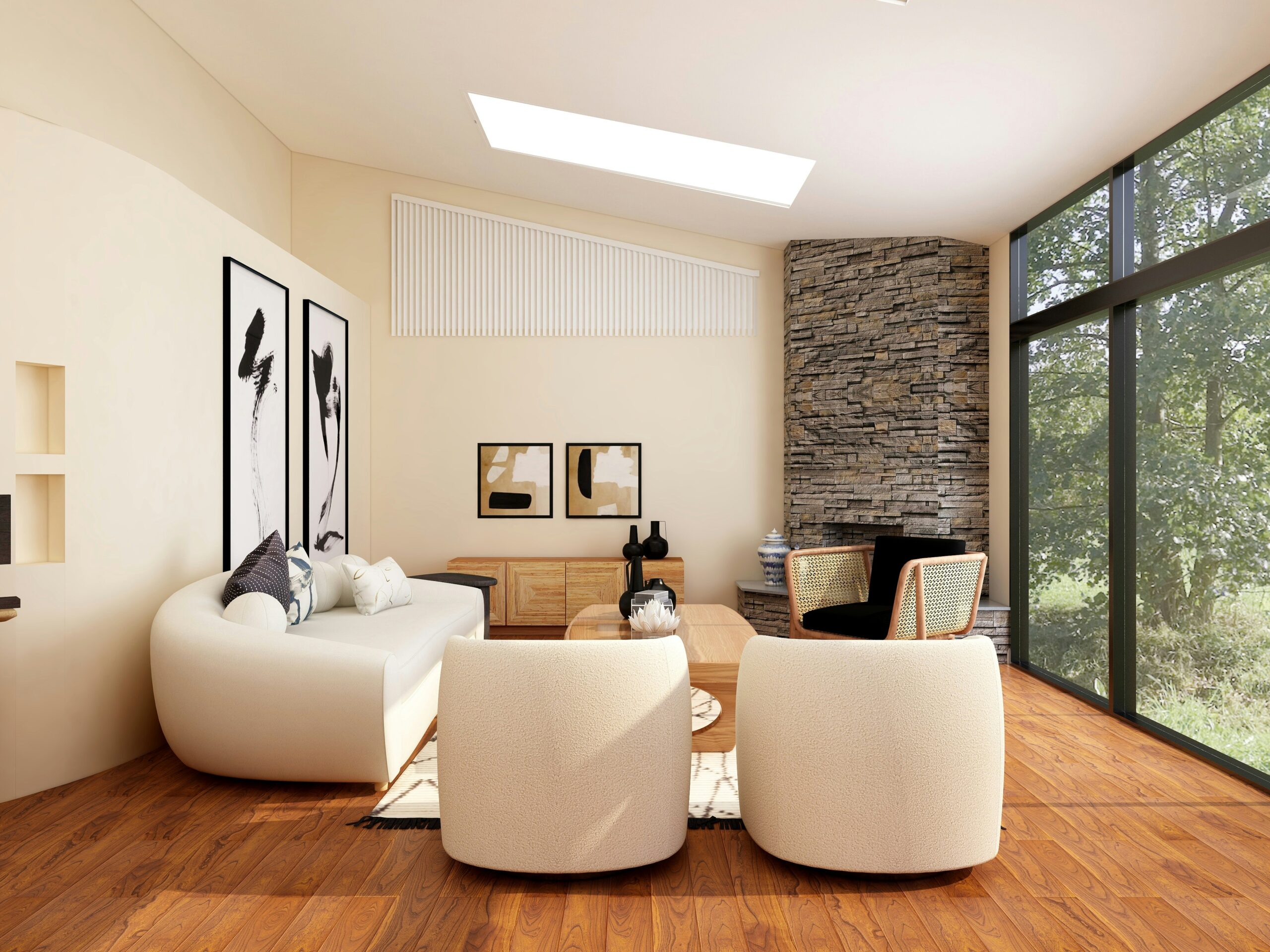
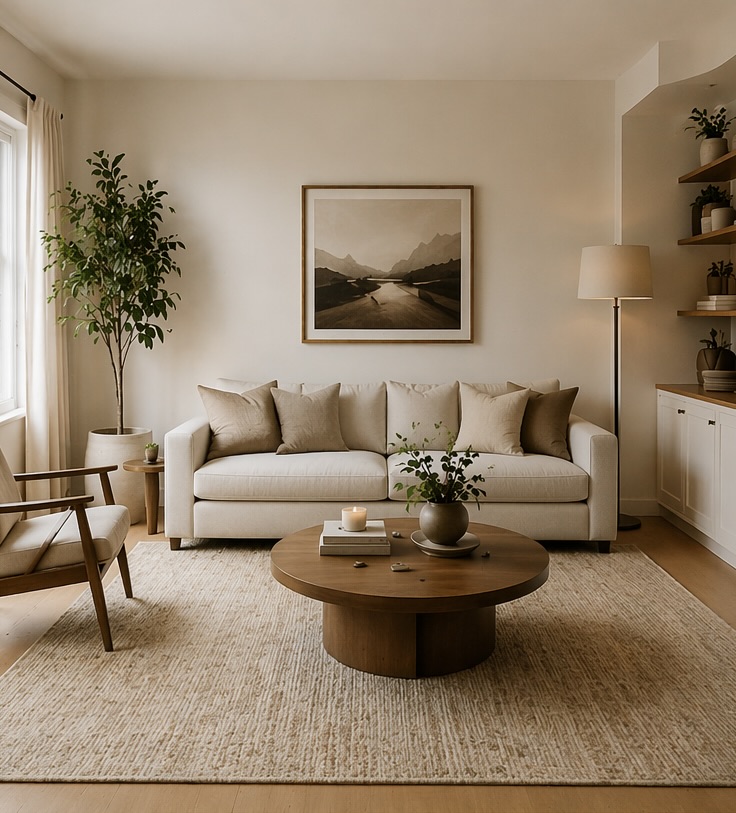
Designers pull furniture slightly away from the walls. Just a few inches can change everything. It creates visual breathing room, improves the flow of the space, and
makes the room feel more intentional and put-together.
Anchoring your seating with a rug helps define the layout and gives the eye a place to rest, rather than stopping at the edges.
THE SMALL SHIFT
Pull the sofa forward. Create a boundary.
Let the room breathe.
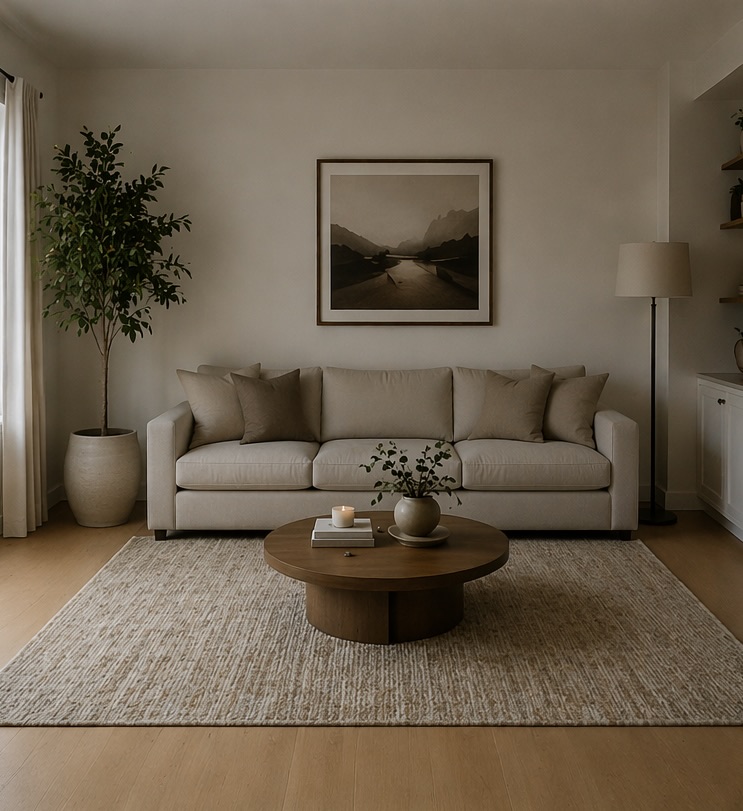
BEFORE
Furniture pushed against the walls feels rigid and flat.
AFTER
Floating the sofa creates flow, balance, and the illusion of more space.
DESIGNER INSIGHT
A room isn’t about how much space you have, it’s about how you use it. Floating your furniture is one of the
simplest ways to make any small living room feel elevated and well-designed.
2. They Use One Larger Rug (Instead of a Small One)
A rug that’s too small instantly makes a room feel disconnected.
Designers go bigger than you expect.
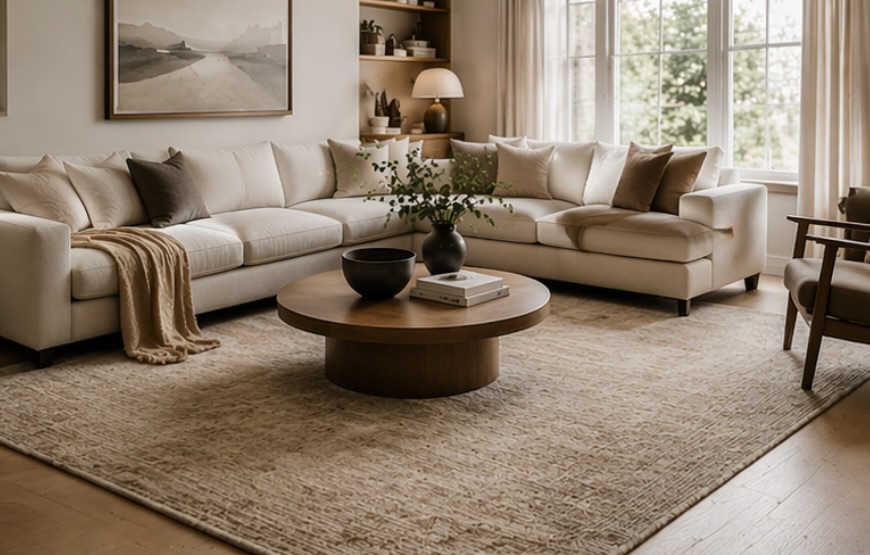
When your rug is large enough to sit under the front legs of your sofa and chairs, everything
suddenly feels connected.
It visually expands the floor, creates one cohesive zone, and brings a sense of calm to the
entire room.
Small rug = broken room.
Right-sized rug = calm, intentional space.
DESIGNER TIP
Aim for a rug that extends at least 6-8 inches
beyond your furniture on all sides, if possible.
Bigger is not just better-
it’s what makes the room feel designed.
3. They Layer Lighting
Lighting is never an afterthought. Designers use multiple light sources to create depth, warmth, and flexibility. Instead of relying on a single overhead light, they layer ambient, task, and accent lighting throughout the room.
A soft floor lamp in one corner, a warm table lamp on a side table, and subtle highlights on textures or artwork transform the entire atmosphere. Good lighting doesn’t just illuminate — it elevates.
4. They Style in Odd Numbers
Even numbers can feel too symmetrical and predictable.
Odd numbers create balance, rhythm, and visual interest.
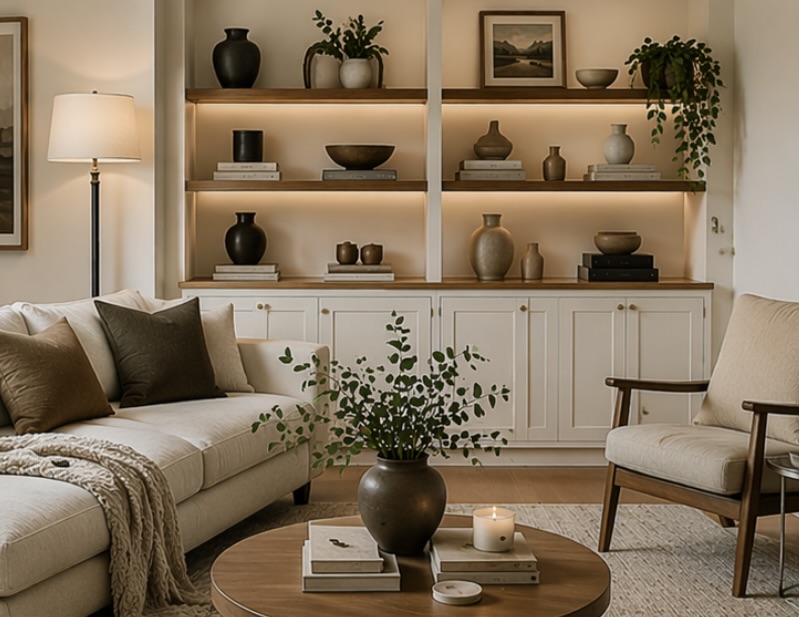
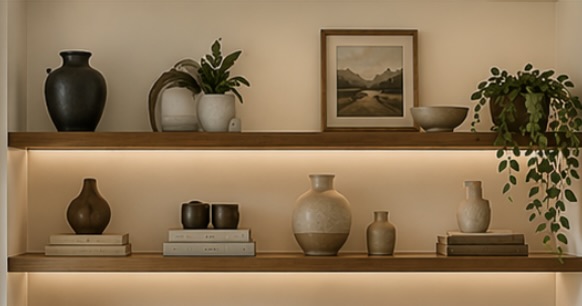
Whether it’s on shelves, your coffee table, or a mantel, designers almost
always group decor in odd numbers usually threes or fives.
It keeps the eye moving and makes the space feel curated, not
contrived.
Think of it as visual storytelling. Each piece gets its moment, but
together they create a mood.
DESIGNER TIP
Try grouping 3 objects with varying heights, textures, and shapes. It’s the easiest way to instantly elevate a space.
BEFORE (EVEN GROUPS)
Feels too symmetrical and static.
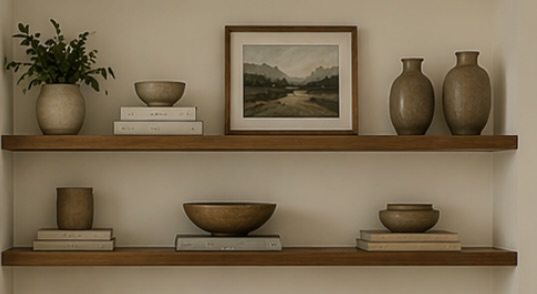
AFTER (ODD GROUPS)
Feels balanced, intentional, and visually interesting.
5. They Use Mirrors Strategically
Mirrors are one of the oldest designer tricks for a reason — they work. Placed thoughtfully, they reflect both natural and artificial light, instantly making a room feel brighter and more open.
Designers often position mirrors opposite windows or near light sources to amplify their effect. Beyond function, a well-chosen mirror also acts as a statement piece, adding elegance without adding bulk.
6. They Stick to a Cohesive Palette
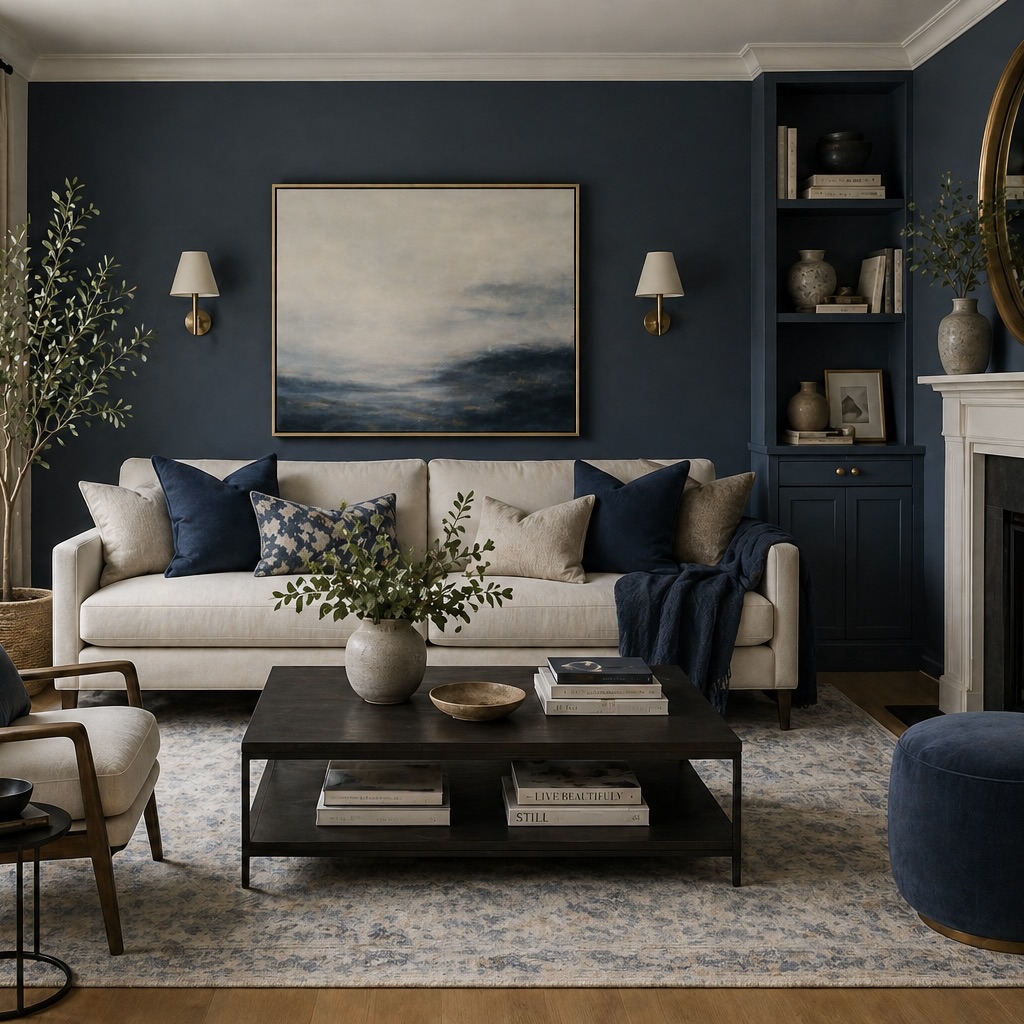
In smaller spaces, colour needs to be intentional. Designers typically work within a refined palette — often neutrals layered with a few subtle accents — to create a sense of calm and continuity.
This doesn’t mean the room has to feel flat or boring. Instead, variation comes through tone, texture, and material rather than competing colours. The result is a space that feels harmonious, polished, and effortlessly put together.
COHESIVE
COLOR PALETTE
A well-balanced palette creates harmony, flow, and a more spacious feeling in any room.
60%
PRIMARY COLOR
Used on walls, larger furniture, and rugs.
30%
SECONDARY COLOR
Used on pillows, throws, art, and medium accents.
10%
ACCENT COLOR
Used in small decor pieces and finishing touches.
7. They Add Texture, Not Clutter
Rather than filling a room with décor, designers focus on how a space feels. Texture becomes the key to adding depth — think soft linens, rich wood tones, boucle fabrics, glass, and brushed metals.
These layers create visual interest without overwhelming the room. It’s a quieter, more refined way of designing — one that makes a space feel luxurious without adding unnecessary noise.
8. They Think Vertically
When square footage is limited, designers shift the focus upward. Floor-to-ceiling curtains, tall shelving, and elongated décor draw the eye higher, making ceilings feel taller than they actually are.
Even small adjustments — like hanging curtains closer to the ceiling or incorporating vertical lines — can dramatically change how spacious a room feels. It’s not about adding more, but about redirecting attention.
Final Thought
A small living room doesn’t need more space — it needs better decisions. When every piece is chosen with intention and every detail works together, even the smallest room can feel elevated, calm, and distinctly designed.
More Articles You Will Like
Cozy Renter-Friendly Apartment Upgrades That Completely Transform Your Space
The Ultimate Apartment Lighting Guide: Designer-Approved Finds for a Beautiful Home
How To Make Your Entryway Feel Warm, Calm And Expensive
Why Modern Dining Rooms Feel Cold (And How To Make Them Feel Warm Again)
The Earthy Spa Bathroom Trend Everyone Is Obsessed With