8 Things Designers Always Do in Small Living Rooms
SMALLER SPACE. BIGGER IMPACT.
Designers don’t get more square footage-they just know how to use what you have differently. These are the subtle, intentional moves that make a small living room feel calm,
expensive, and beautifully put together.
1. They Float Furniture (Even in Small Rooms)
Pushing everything against the walls might seem like the safe choice,
but it’s actually what makes a small living room feel smaller.
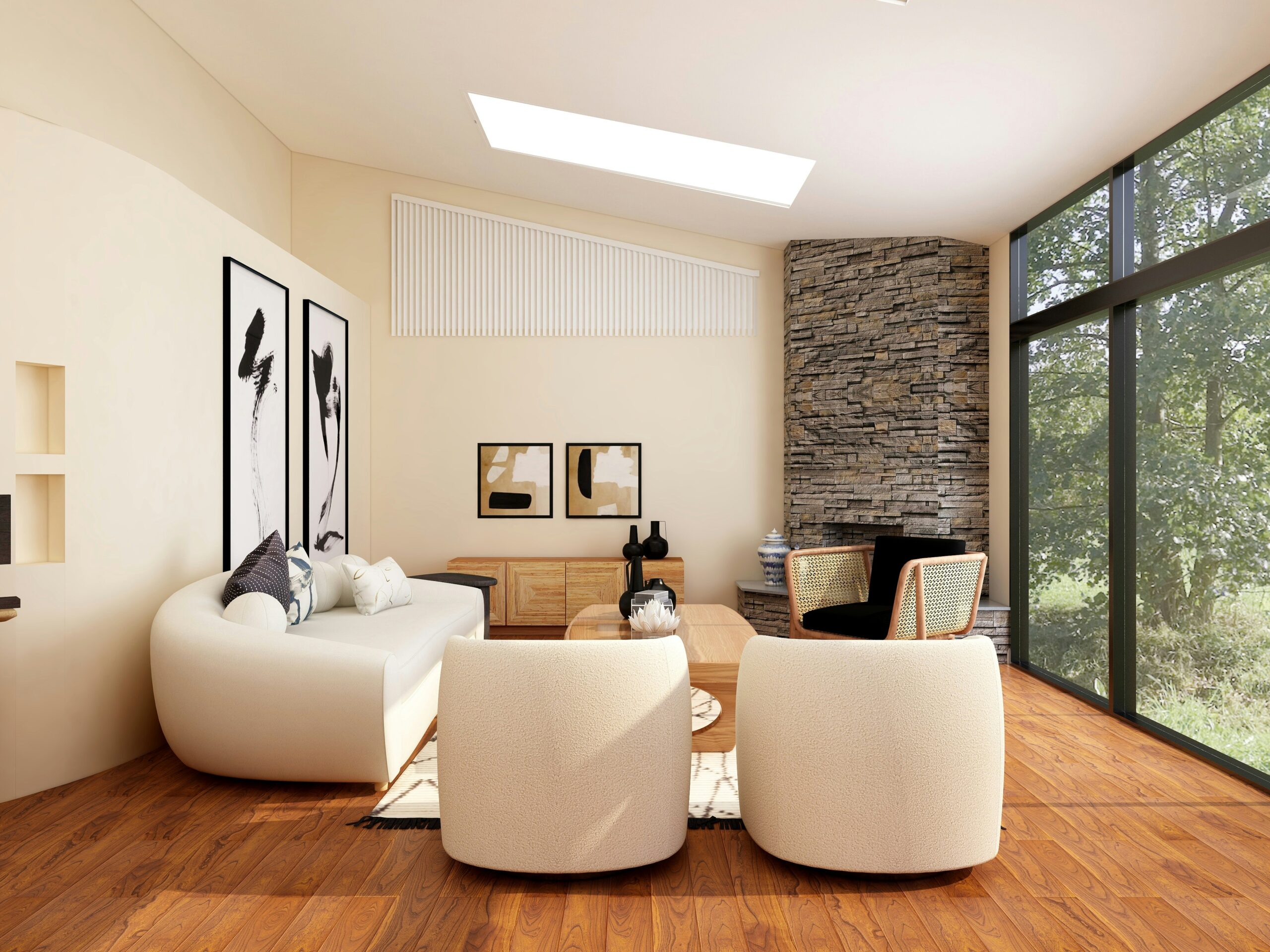
Designers pull furniture slightly away from the walls. Just a few inches can change everything. It creates visual breathing room, improves the flow of the space, and
makes the room feel more intentional and put-together.
Anchoring your seating with a rug helps define the layout and gives the eye a place to rest, rather than stopping at the edges.
THE SMALL SHIFT
Pull the sofa forward. Create a boundary.
Let the room breathe.
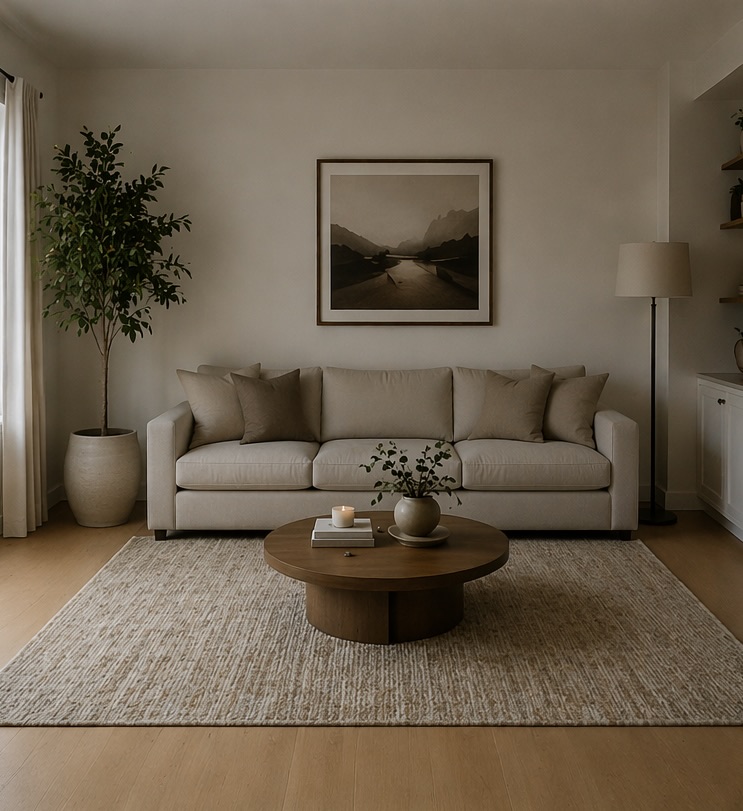
BEFORE
Furniture pushed against the walls feels rigid and flat.
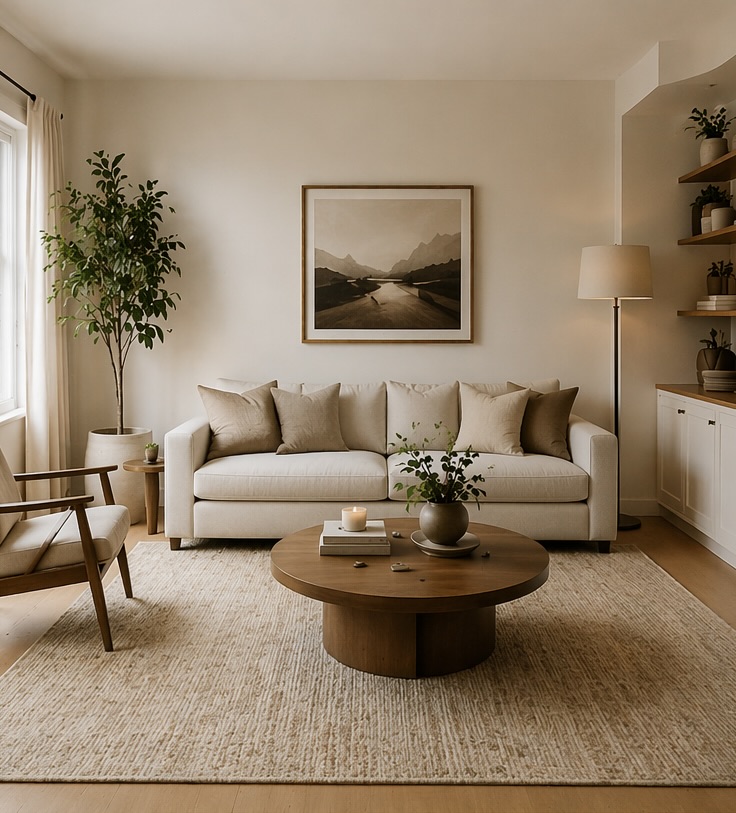
AFTER
Floating the sofa creates flow, balance, and the illusion of more space.
DESIGNER INSIGHT
A room isn’t about how much space you have, it’s about how you use it. Floating your furniture is one of the
simplest ways to make any small living room feel elevated and well-designed.
2. They Use One Larger Rug (Instead of a Small One)
A rug that’s too small instantly makes a room feel disconnected.
Designers go bigger than you expect.
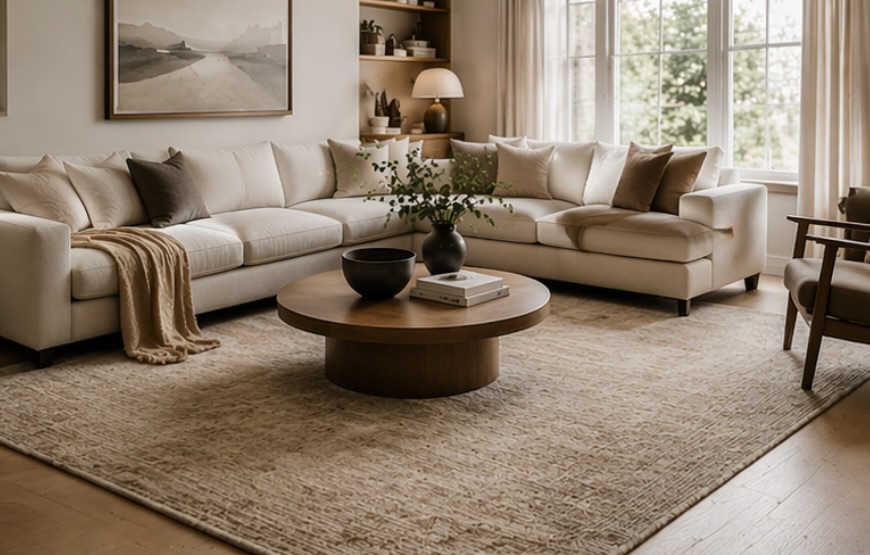
When your rug is large enough to sit under the front legs of your sofa and chairs, everything
suddenly feels connected.
It visually expands the floor, creates one cohesive zone, and brings a sense of calm to the
entire room.
Small rug = broken room.
Right-sized rug = calm, intentional space.
DESIGNER TIP
Aim for a rug that extends at least 6-8 inches
beyond your furniture on all sides, if possible.
Bigger is not just better-
it’s what makes the room feel designed.
3. They Style in Odd Numbers
Even numbers can feel too symmetrical and predictable.
Odd numbers create balance, rhythm, and visual interest.
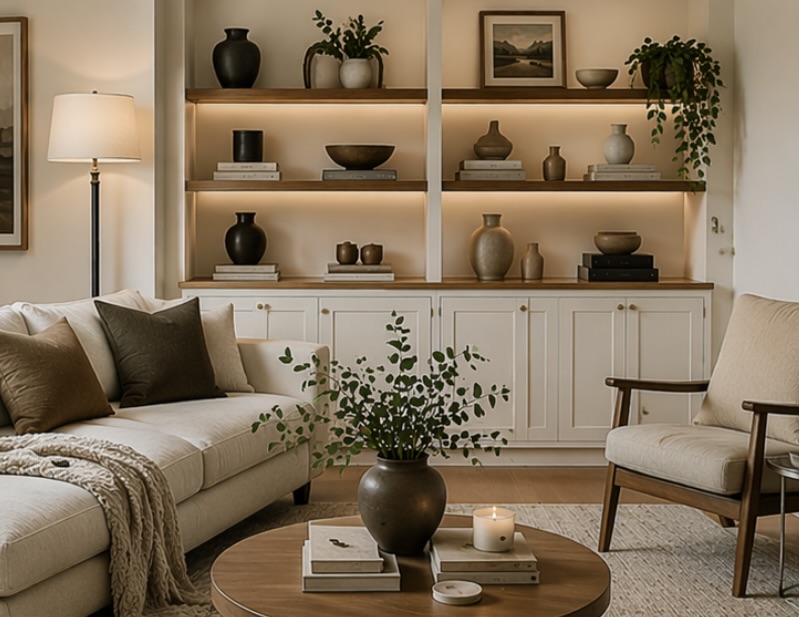
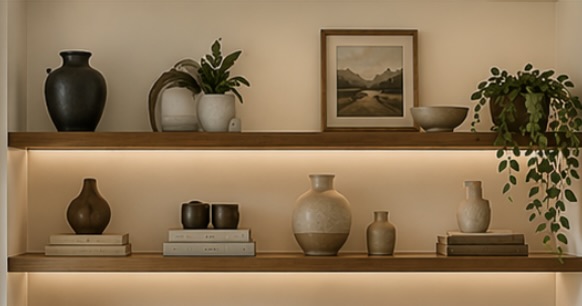
Whether it’s on shelves, your coffee table, or a mantel, designers almost
always group decor in odd numbers usually threes or fives.
It keeps the eye moving and makes the space feel curated, not
contrived.
Think of it as visual storytelling. Each piece gets its moment, but
together they create a mood.
DESIGNER TIP
Try grouping 3 objects with varying heights, textures, and shapes. It’s the easiest way to instantly elevate a space.
BEFORE (EVEN GROUPS)
Feels too symmetrical and static.
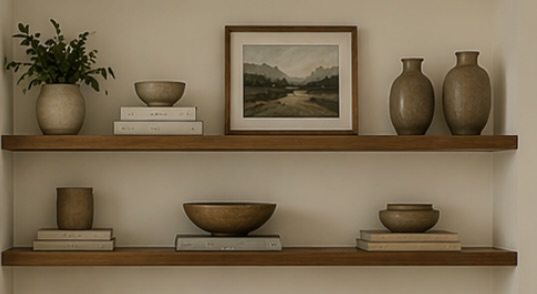
AFTER (ODD GROUPS)
Feels balanced, intentional, and visually interesting.